文字声音影子
纸,写有字的薄膜,同轴异向马达,灯
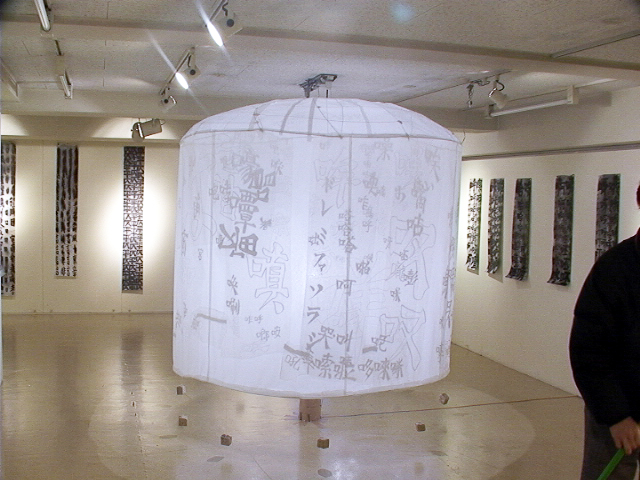
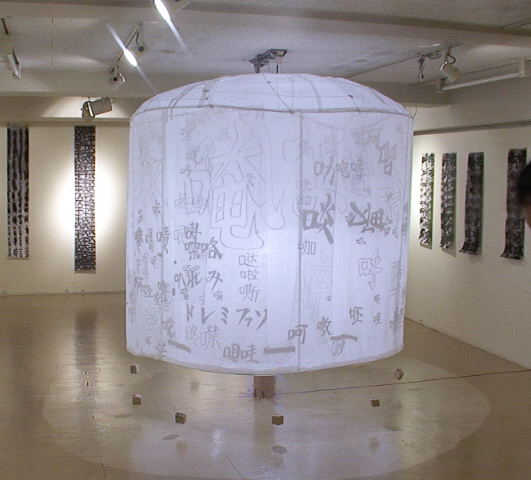
实施于日本越谷,这是一个用纸做成的钟型的大灯笼,在透明薄膜上书写了汉语和日语中的各种像声字,如“哈”“啊”“哦”“喔”“噫”之类的字,一般都有一个口字偏旁。透明薄膜悬挂在纸钟的内部,分内外两层,由两个方向和速度都不同的马达驱动。钟体内部正中的灯光将菲林上的字投映在纸面上,这样从外部看则是各种与声音有关的文字在“钟”的表面旋转。由视觉运动在观者的意识中制造各种音响重叠交错此起彼伏的效果。
"Silence Bell" is a bell made of white paper with the shadows of many
Chinese and Japanese characters moving across its surface. Inside is a lamp and several
transparent films inscribed with characters, which are rotated by two motors running
in opposite directions. As the films keep turning, the lamp
throws the shadows of the characters onto the paper.
All the characters are onomatopoeic words that describe different kinds of sound, for example
’Ah,’ ‘Oh,’ ‘Ha Ha Ha,’ ‘Ding Dong,’ ‘Do Re Mi Fa So La Ti.’ Their
whirling shadows will create a feeling of sound in the mind of the viewer.
将空间运动来代替声音,这种观念来自西藏的“转经筒”,人们将佛经装在铜制圆筒中,或将大明咒镌刻在铜筒的表面,每转动一圈就等于念诵其中的佛经或咒语一遍。最大的经筒高达数米装置在寺庙的入口,朝拜的人们来到圣地的第一件事就是一个个地推动它们。小的经筒是手持的,人们可边行走边转动它。在拉萨,人们黄昏时在环绕大昭寺的八角街上一圈圈地顺时针行走,这种仪式称为“转经”。在日本我也发现了同样的风俗,过年过节时人们推动搁放佛经的巨大的圆形书架,使之旋转。
The visual element of this work, a moving circle, is just as important as
the phonetic or auditory element. The idea of a circle moving has a special
traditional significance in the East, especially in Tibet, China and Japan. In Tibet,
people put Buddhist sutras written on paper inside a copper wheel and turn it:
one full turn of the wheel means that the sutra has been read once. You can often
see people constantly spinning these so called ‘Turning Sutra Canisters.’ The wheels
used come in a variety of sizes, some big ones in
temples are 4 meters high and 3 meters in diameter, and there are also some
handy small ones which people turn by hand as they walk. Everyday in the late
afternoon, people in Lhasa walk around the famous temple turning these
canisters, this is known as ’Turning Sutra Walking.’
让文字在空间中运动就等于使文字所携带的声音和意义在精神空间中生效,从而使物理运动具有精神功能,在这种奇异的思想的支持下,我着手用文字改变日常行为的属性,从而使平淡单调重复的日常行为获得宗教般的意义:我们行走,车轮子转动,走马灯转动,这样的动作可以成为一种反复的念叨,一种念经一般的修炼行为,贯彻在生活中的每分每秒。
This concept relates to both my paper bell and my bike work, as both
works involve moving circles. The concept of ‘walking’ relates to both the bike and
the wooden shoes works. Both works involve a kind of printmaking and
make walking (or riding) into a kind of writing. I use the image of a bell because
bells are used to make loud sounds, and traditionally bronze bells were always
inscribed with characters. The moving shadows of the characters on the paper
bell are perceived visually, and the meaning of the words produces a kind of
‘silent sound.’ It's silence, but also full of sound.
A circle moving, the visual element of this work, is equally important to the phonation, the auditory element. The idea of a circle moving came from a special tradition of East, especially from Tibet, China and Japan. In Tibet , people put the Buddhist sutra paper inside a copper wheel and run it., and one full turn of the wheel means that people had read all the sutra once. So people turning the wheel all the time. This is so called "Turning Sutra Canister". The wheel used here has variety of sizes, some big ones in the temples are 4 meters high and diameter is 3 meters, and there is also some handy small one which people and run it by hand while they walk. In Lhasa , people walks around the famous Temple in the late afternoon everyday. This is so called "Turning Sutra Walking".
This concept is relating both to my paper made bell and bike work. They are both circle moving.
The concept of "walking" is relating both to the bike and the wooden shoes works. They all print some trace and make the walking as one kind of writing.
The image of bell is because the bell is used to make big sound, and in the traditional way, the copper bell always have some characters on it. Here, I made the bell with paper, and the moving shadow of letters that can be perceived visually and the meaning of the words make some silent sound. It's silence, but also full of sound.