书籍、钢、樟木
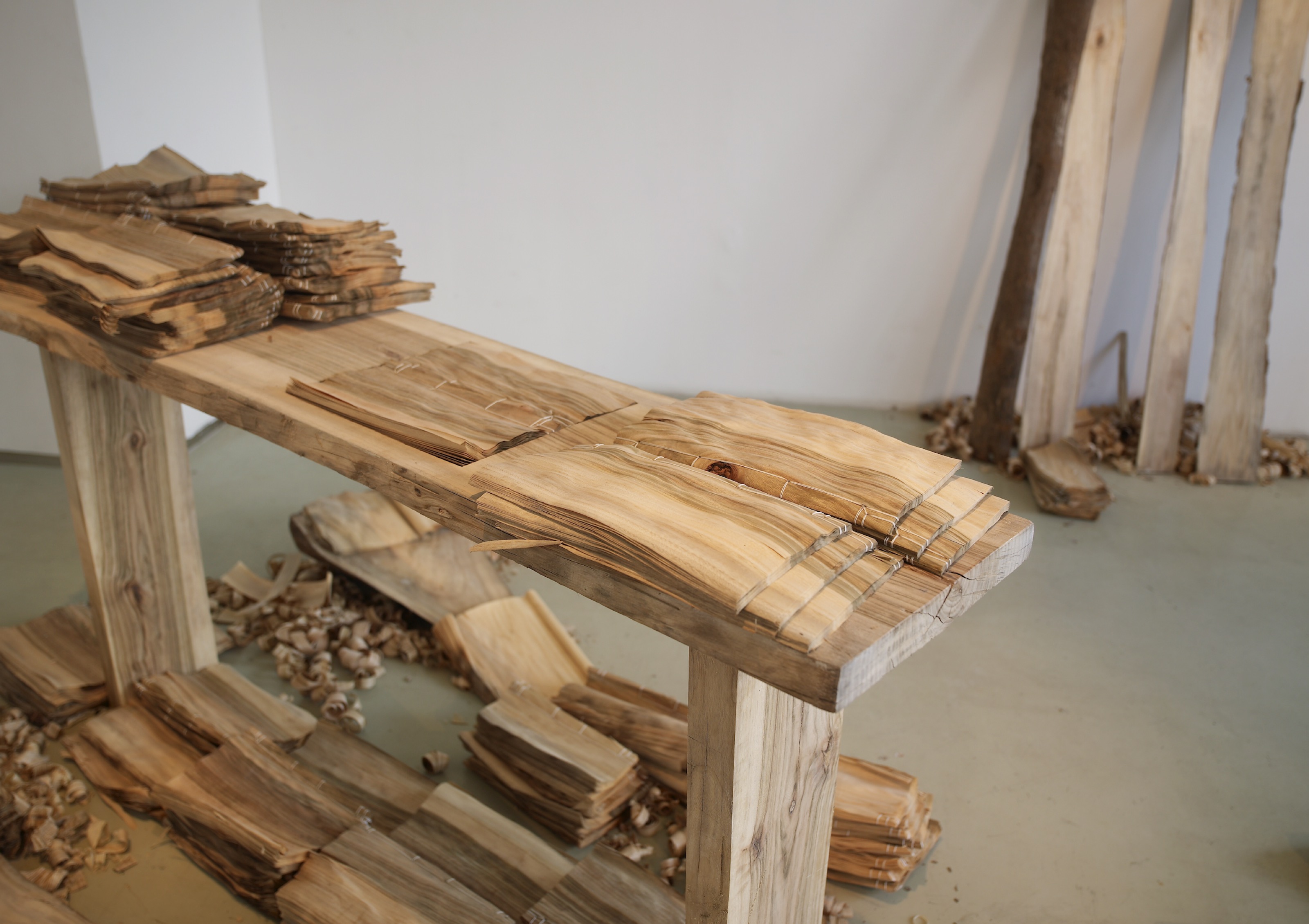
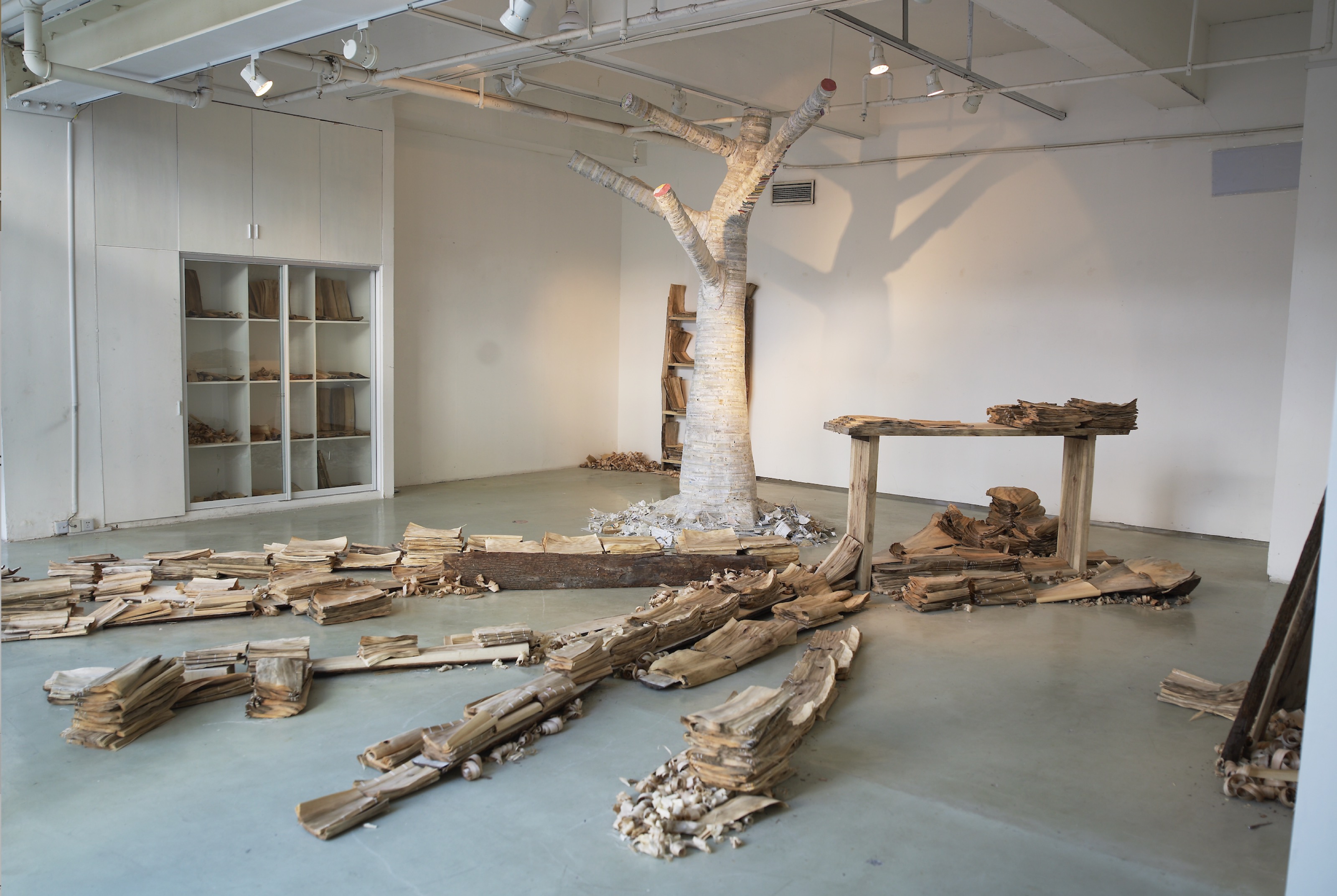
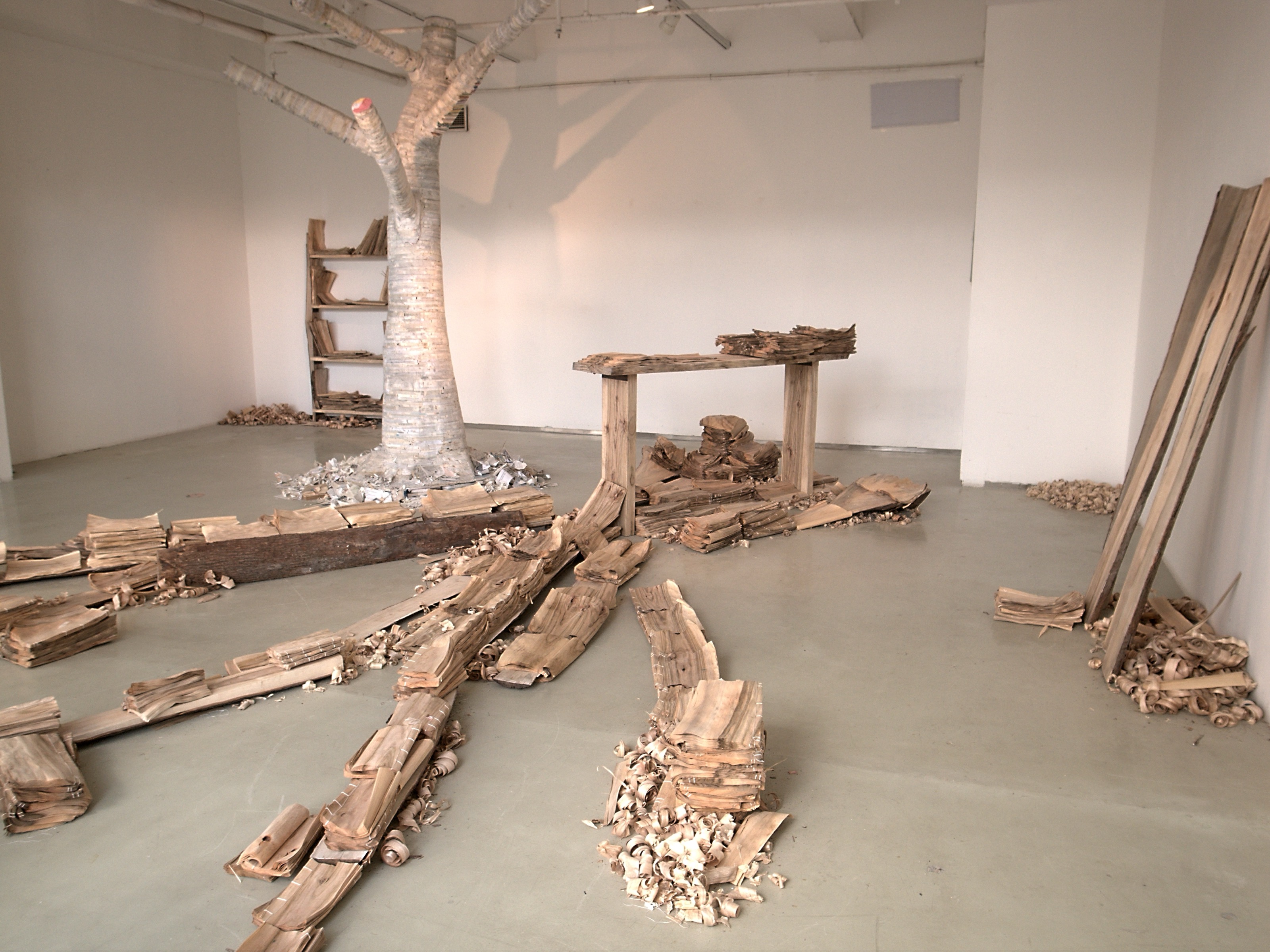
第一棵树是将数千本旧书籍堆叠固定进行切削,仿制出一棵树干的造型。树干的表皮由书页的立面切削而成,在树干的一些局部还可以看到书脊文字的局部。第二棵树,则是将一株完整的樟树切削成刨花一般的极薄的木皮,用这些木皮装订成606本线装书。由于来自一颗完整的树,每本书上面的木头纹理都互相连接,每一本书第一页和最后一页之间书页上的纹理则是从树心到表皮的纹理变化。树木上无法切削成木皮的剩余部位则被制作成桌子和书架。展出时,一摞摞木皮线装书看似随意地,其实严格按照树木原有的秩序摆放,这样每本书上面的木纹纹理完全互相连接,如同一条河流。
Two Trees
The first tree is a tree trunk cut and carved out of thousands of stacked old books. The barks of the tree are cut from the fore edge of the books, texts are partially visible on the tree trunk where the book spines are shown. The second tree is a whole camphor tree shaved into extremely thin pieces, which were used to bind 606 thread-bound books. All the patterns on the book covers connect with each other given they are bound from a single tree. The patterns on the fore edges are the patterns from the heart wood to the bark. The parts of the tree which could not be shaved are made into tables and shelves. When exhibited, the seemingly randomly stacked wood-shaving-thread-bound books are actually placed according to the original parts of the tree. As a result the pattern and texture of each book connects with each other perfectly, like a running river.