Work record
《镜书阁》Mirror Book Pavilion
天津钟书阁顶楼的书法装置,把镜体字、书籍、城市天际线、日光和互相观看的身体放进同一个反射空间。A rooftop calligraphy installation in Tianjin where mirrored writing, books, skyline, sunlight, and reflected bodies meet.
- Year
- 2025.5
- Medium
- Installation / 装置, Calligraphy / Text, Large Art Plans / 大型艺术计划
- Status
- Expanded record created from user-provided project text and local Tianjin image archive.
现场
《镜书阁》现场与邀请
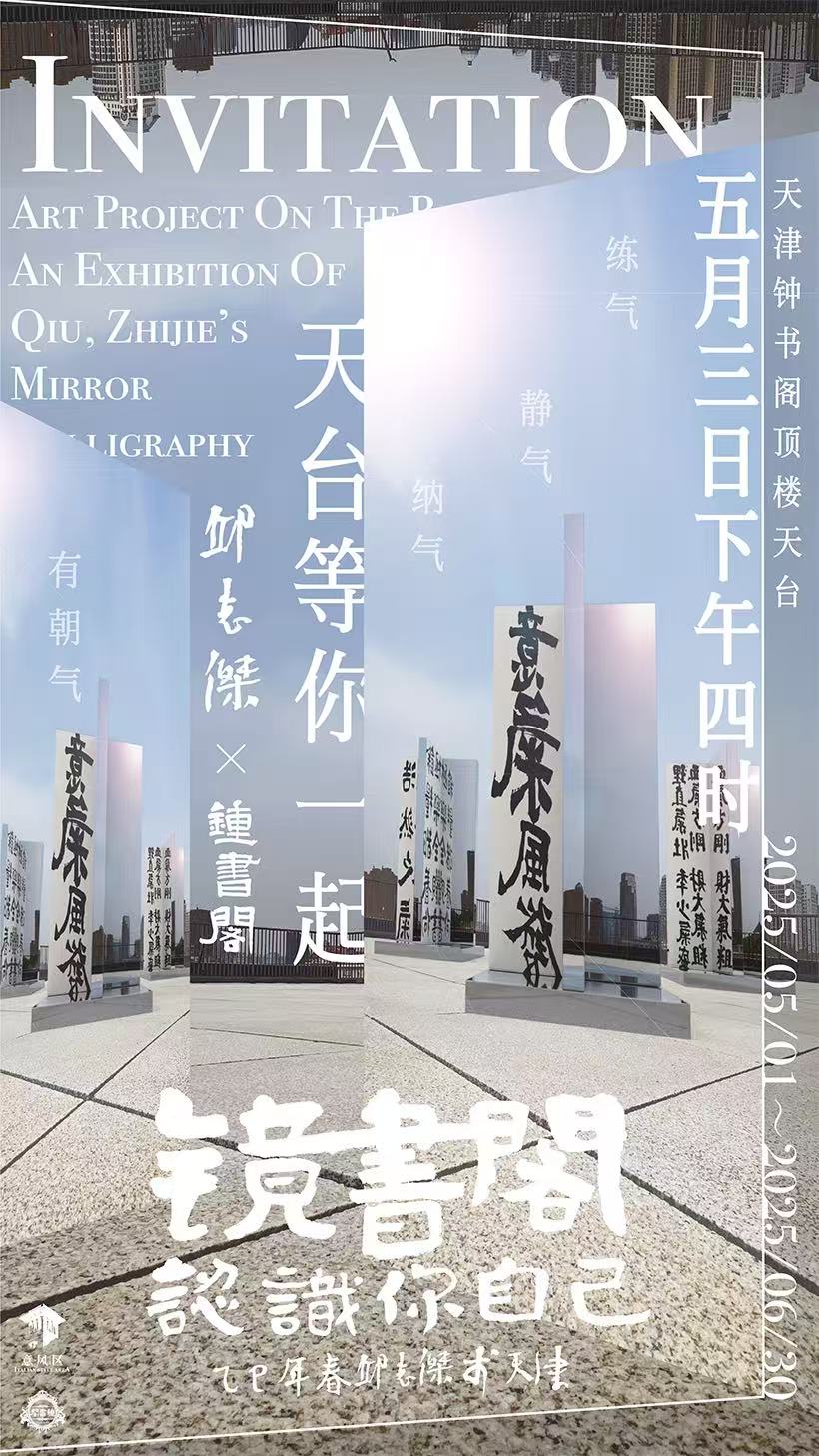
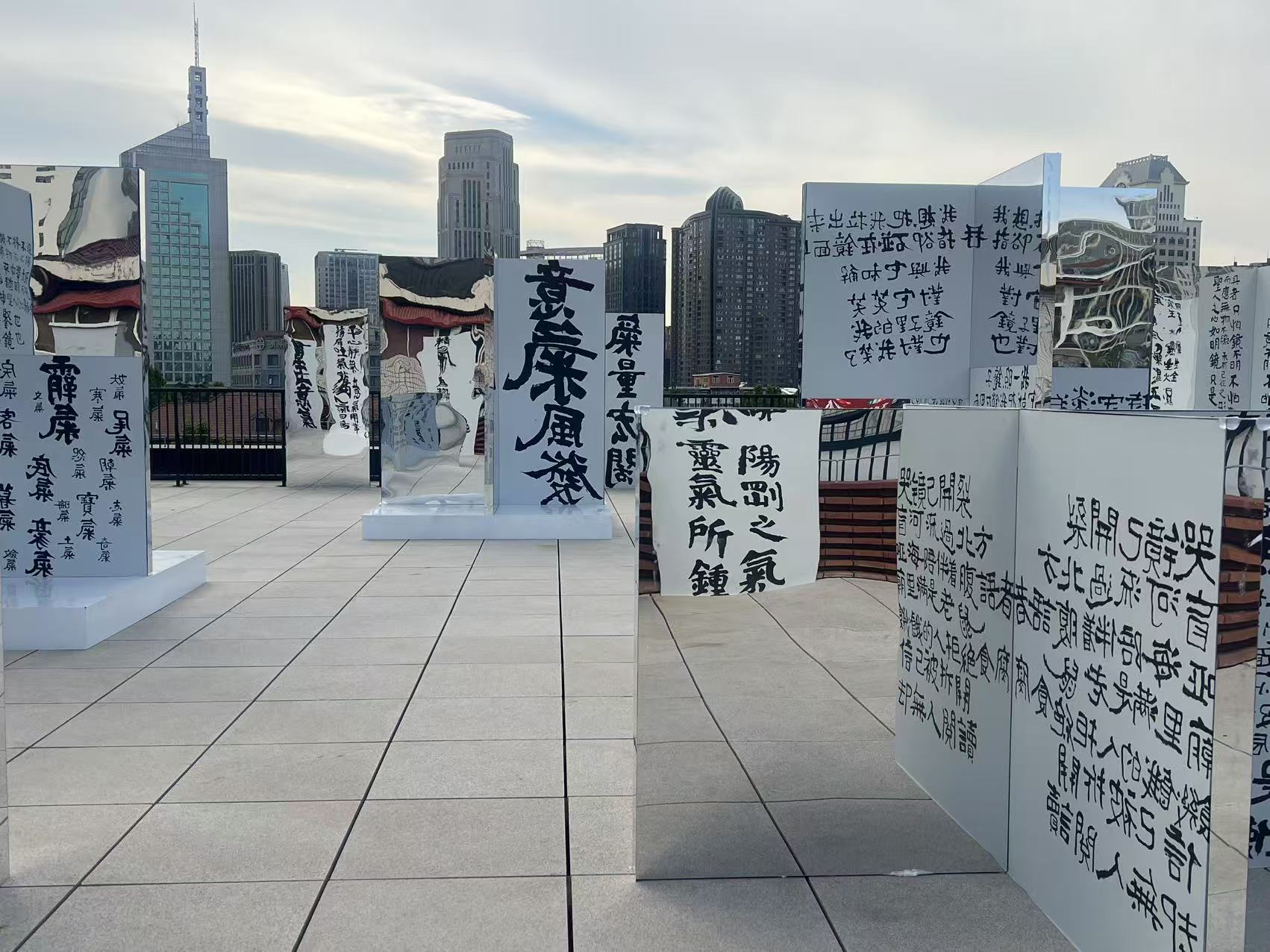
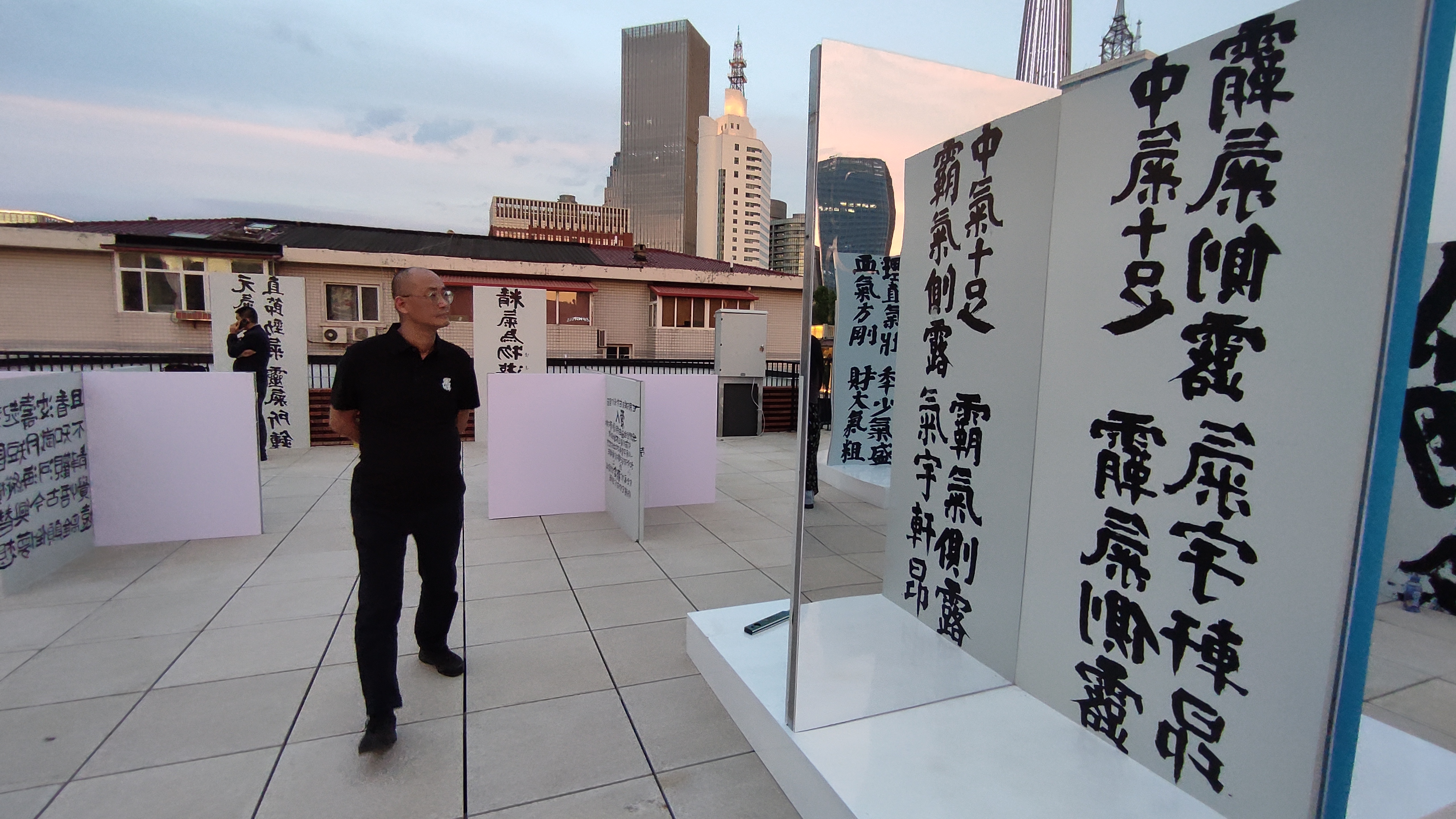
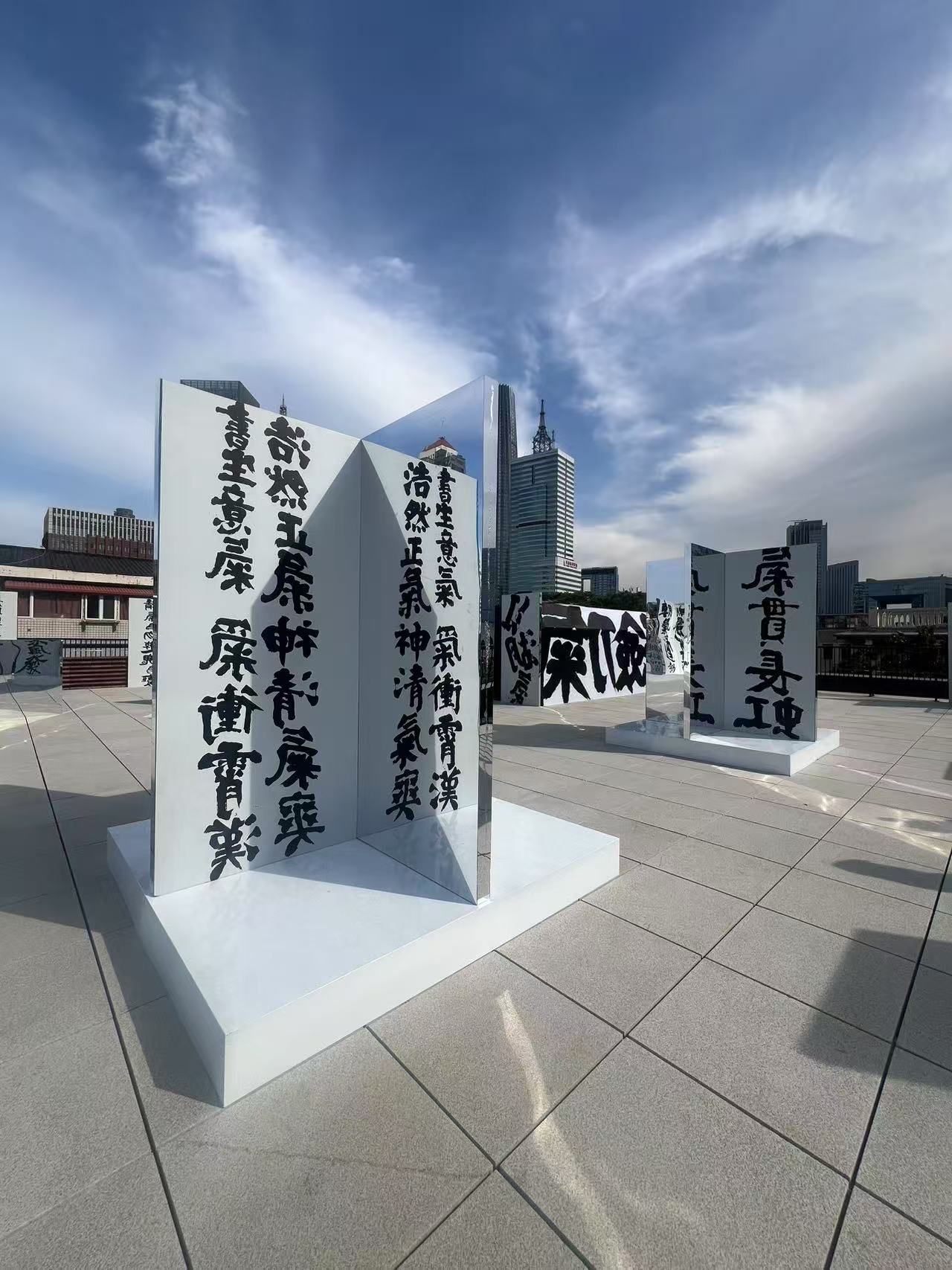
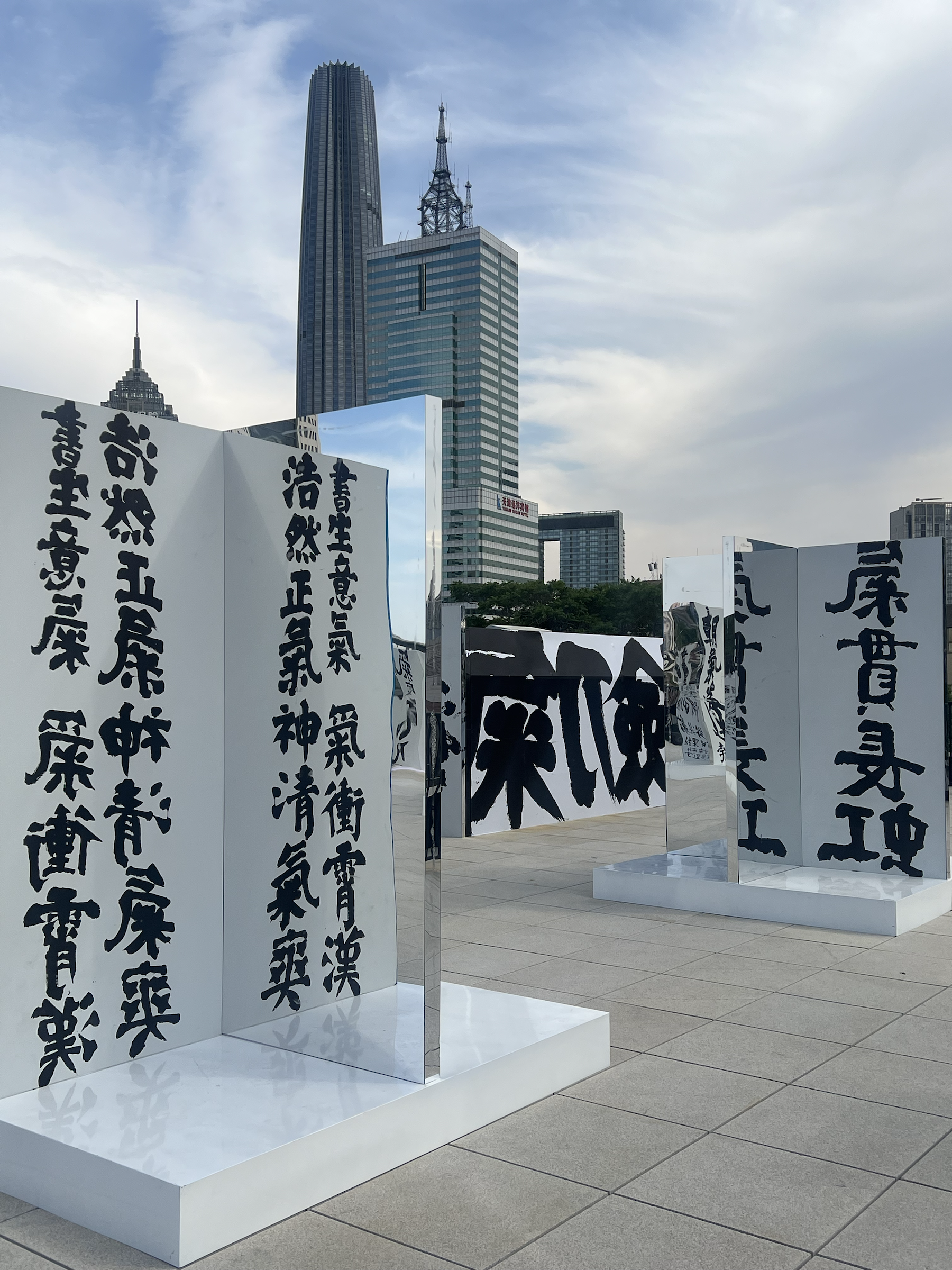
Description
Editorial note for the rebuilt archive
镜书阁在钟书阁书店的顶楼,楼里面的是书籍,楼顶的是书法。
在古代,钟和镜都是青铜铸造的,都用于提醒。钟用来报时,提供听觉,提醒我们时光流逝。镜用来整理衣冠,让我们看清自己的样子,然后面对世界。它提供视觉,提醒我们空间的存在:我们在世界的眼中看起来是什么样子的?
时间和空间都通过书连接在一起。书籍的书和书法的书,都是关于知识、话语、思想和情感的传递。阅读书籍和书法的,是眼睛,更是心灵。
四壁都是书籍和书法,日光在镜子的表面迁移跃动,钟声由远及近。站在钟书阁顶楼上望去,一层层的天际线,近处是洋房楼宇,稍远处高楼耸峙,再远处海河蜿蜒。一层层的楼群,涟漪一般,形成强大的气场,像年轮,像平摊的考古坑,既是空间的聚集,也是时间蔓延。
镜书阁里写的字,都是镜体字。也就是左右翻转的字,要在镜子中才能阅读。所以镜书阁里安装了很多镜子。如果你可以,你可以在大脑中翻转这些字,把它们变成可读的诗句。如果你一时不能,那么可以借助到处都是的镜子。
镜书阁里形象互相交叠、渗透。你我互相观看,测量,界限消融。在内与外,正与反、顺与逆翻转的时刻,我们内在的自我与外部的证据之间的联系,依赖于记忆。这是秩序崩溃和重组的空间,这是我们和自己重新相遇的空间。每一次相遇都是久别重逢,这是我们与崭新的自我的一场艳遇。
所以镜书阁里写的字,一部分关于镜子本身,一部分是关于气。因为气是贯通阴阳晦明的内在的精神。王阳明说:你未看此花时,此花与汝心同归于寂:你来看此花时,则此花颜色一时明白起来:便知此花不在你的心外。
你未来镜书阁时,此处与你的心同归于寂:你来时,则此一时气象万千:便知此镜书阁不在你的心外。
Mirror Book Pavilion is located on the rooftop of Zhongshuge bookstore. Inside the building are books; on the roof is calligraphy.
In antiquity, both bells and mirrors were cast in bronze, and both served as instruments of reminder. The bell marks time through sound and reminds us of its passing. The mirror lets us adjust our dress, see our own appearance, and face the world. It offers vision and reminds us of space: how do we appear in the eyes of the world?
Time and space are joined through books. The shu of books and the shu of calligraphy both transmit knowledge, speech, thought, and feeling. What reads books and calligraphy is not only the eye, but also the mind.
Books and calligraphy surround the space. Sunlight moves across the surfaces of mirrors, and the sound of bells seems to approach from far away. From the rooftop, one sees layered skylines: nearby houses, taller buildings farther away, and the Haihe River winding beyond them. These layers gather like ripples, annual rings, or a flattened archaeological pit: a concentration of space and a spreading of time.
The characters in Mirror Book Pavilion are mirror characters, reversed from left to right and readable through mirrors. Many mirrors are installed throughout the pavilion. If one can, one may turn the characters around in the mind and read the lines directly; if not, the mirrors everywhere can assist.
Images overlap and permeate one another. You and I look at and measure one another; boundaries dissolve. At the moment of turning between inside and outside, front and back, forward and reverse, the link between the inner self and external evidence depends on memory. This is a space where order collapses and reorganizes, where we meet ourselves again. Every encounter is a reunion after long separation, an encounter with a new self.
Some of the writing in Mirror Book Pavilion concerns mirrors, and some concerns qi. Qi is the inner spirit that passes through yin and yang, darkness and brightness. Wang Yangming said: before you look at this flower, the flower and your mind return together to silence; when you look at it, its colors become clear all at once. Then you know this flower is not outside your mind.
Before you come to Mirror Book Pavilion, this place and your mind return together to silence. When you arrive, the whole scene becomes alive with atmosphere. Then you know that Mirror Book Pavilion is not outside your mind.
Themes
Source references
- User instruction, 2026-06-22: 2025《镜书阁》书法装置 full project text
- Local image folder: 大计划/2021 日常书法计划/2025 镜书阁/天津镜书阁