世界地图计划

《不存在的旅行者》圣保罗双年展壁画。

2014测绘/地图装置文字与书法绘画作品策展

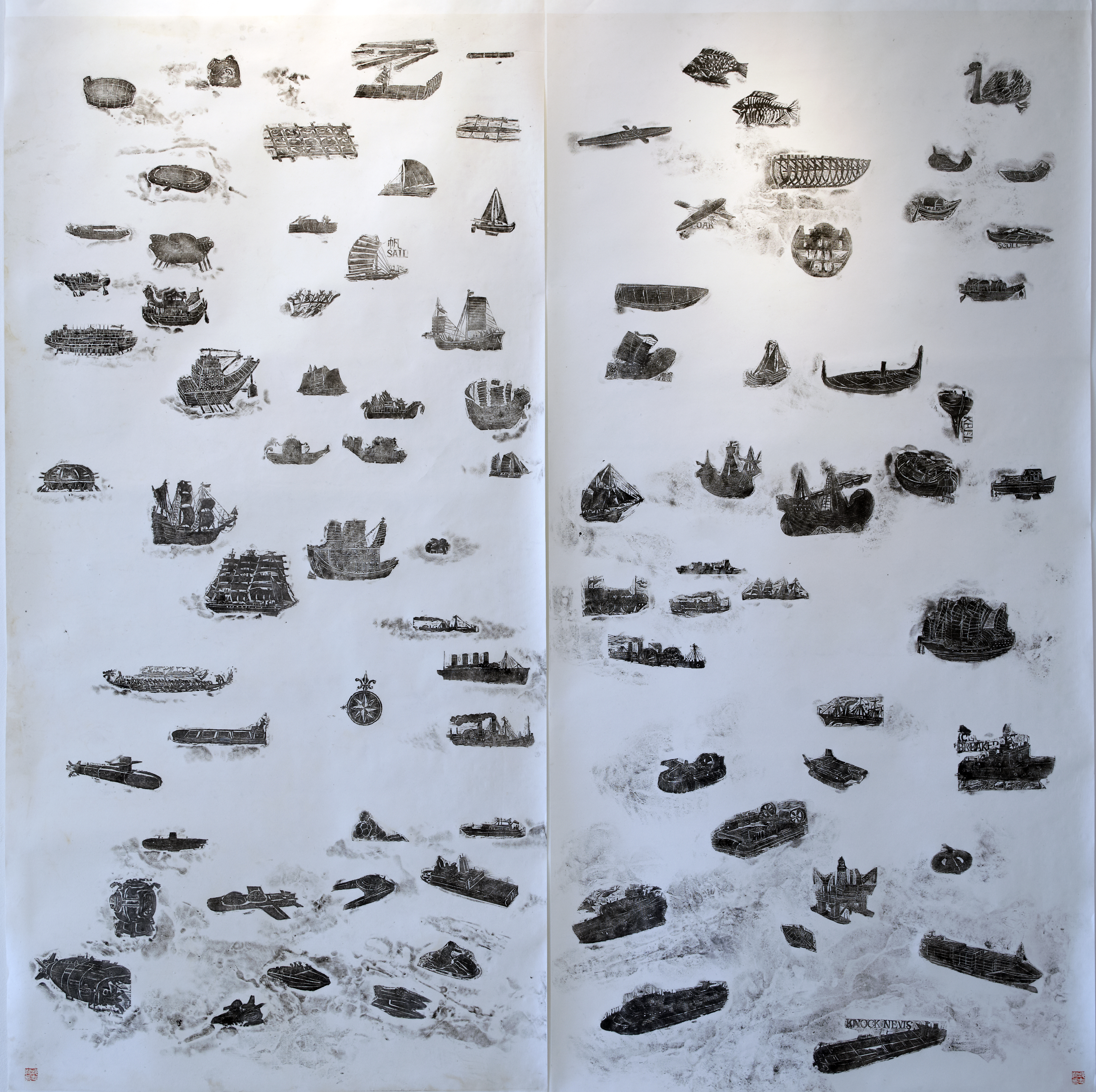
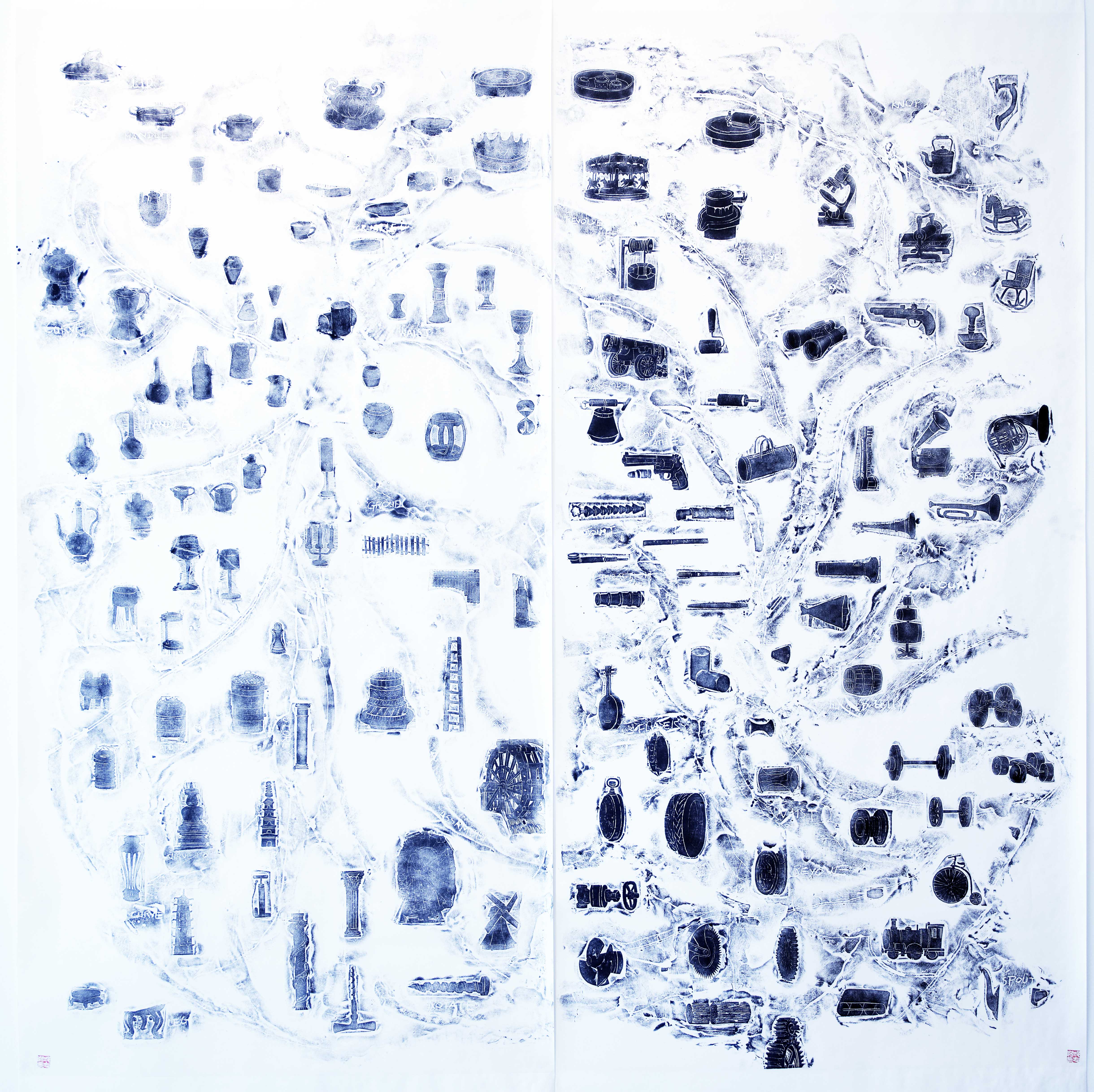
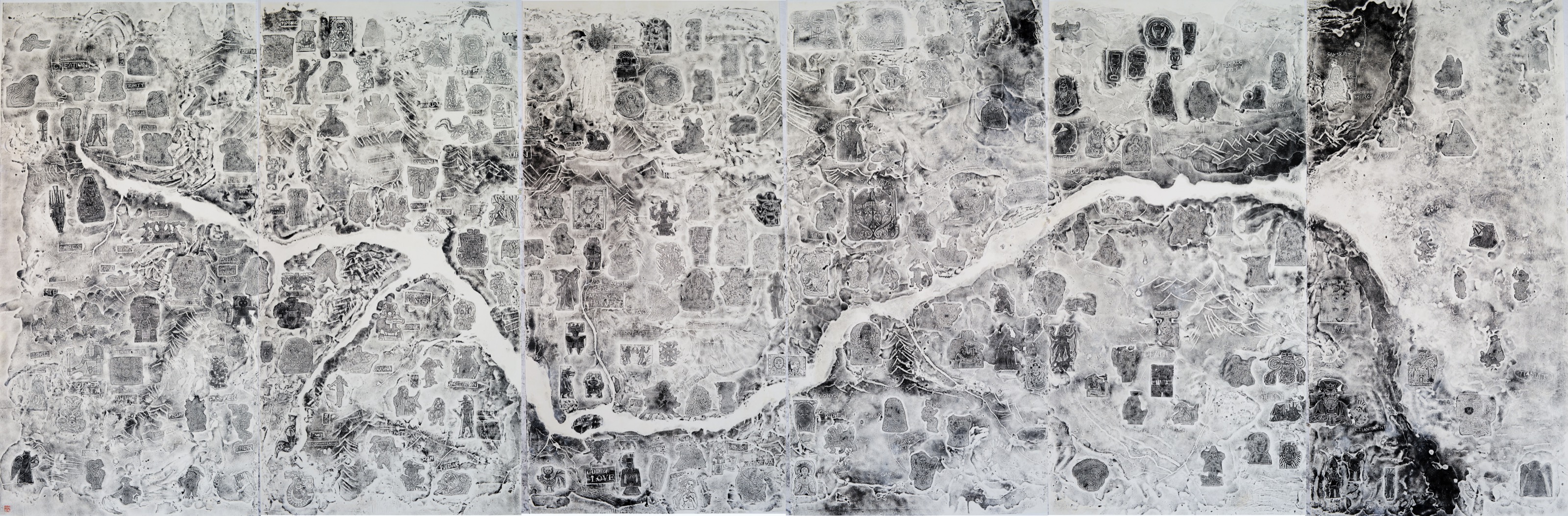
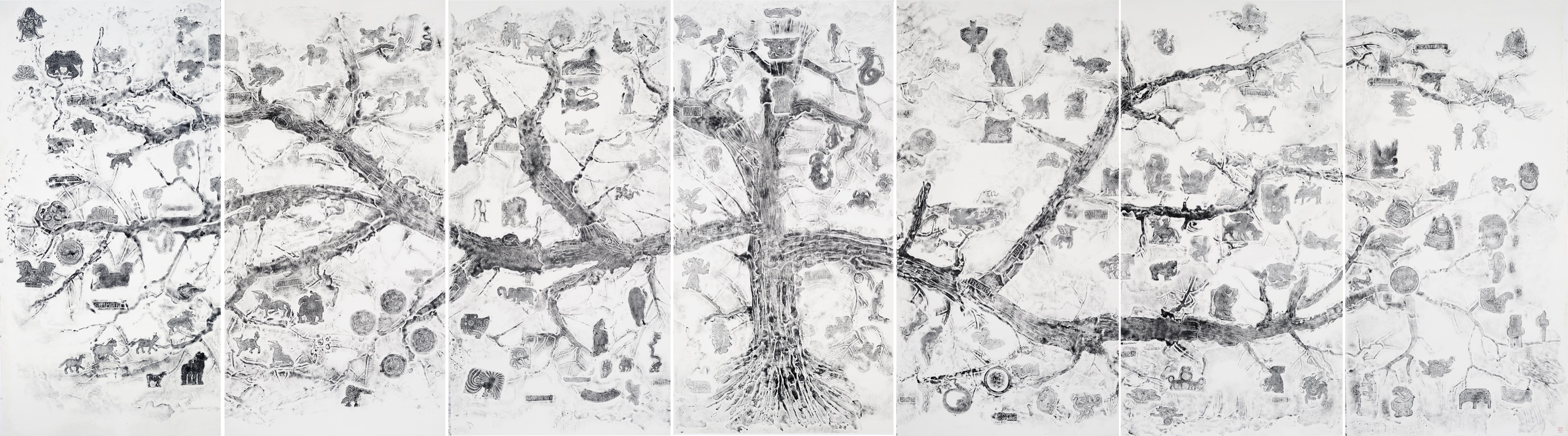
2014年圣保罗双年展的主题是《如何……不存在的东西》,邱志杰在展厅入口处的32米高7.5米的巨大墙面绘制了水墨壁画《不存在的旅行者》,成为整个展览中最显眼的点题之作。

该作汇集了大量文化研究成果,分别涉及乌托邦和政治思想、史诗、众神、世界各大宗教的新运动、旅游文化、探险者、科幻、流浪汉小说和公路电影、怪兽、地理大发现、殖民史、人口迁移和物种交换、学院等多种话题,构成一幅迷宫一般的视觉史诗,又不乏诗意和幽默感。例如他把商品拜物教、市场原教旨主义和仪式巫术并列放进宗教地图中;而在旅行者中,在马可波罗和哥伦布旁边,出现了蒲公英、漂流瓶和土著人的飞去来器。

The Inexistent Traveler

The 31st Bienal de São Paulo in 2014 was titled “How to (…) things that don't exist”. Qiu Zhijie created a large-scale (32m x 7.5m) ink mural “The Inexistent Traveler" by the entrance of the exhibition, which was one of the most prominent pieces as well as responding to the theme of the Bienal.

A huge amount of cultural research went into the final work, topics covered include utopia and political ideology, epic, the gods, new movements of the world's major religions, tourist culture, explorer, science fiction, picaresque novel and road movie, monster, geographical discovery, colonial history, migration and exchange of species, and academy etc., all of which form a maze of visual epic that is both poetic and humorous. For example, the artist juxtaposed commodity fetishism, market fundamentalism and ritual witchcraft in the map of religion; and among “travelers”, next to Marco Polo and Columbus, appeared dandelion, drift bottles and indigenous people’s boomerang.

2,不存在的旅行者 The Inexistent Traveler

墙上水墨地图,Ink Map on Wall,32m×7.5m, 2014

绘製地图是西方社会接受和理解世界所採用的基本方法之一。通过地图,未知变得可见、可理解。但是,地图也曾被用来吓跑潜在的访客,像是在早期欧洲人的地图裡,美洲大陆上赫然印着的标题「Here be monsters」(译者注:这儿有怪兽)。

沿袭绘製地图的历史与技法,结合中国古代绘出想象空间的传统,邱志杰构建起意想不到的叙事、虚构的城市,或是奇特的乌托邦地点,诸如「乌托邦地图」与「总体艺术地图」。少时的书法训练让他得以运用这些技法完成手绘创作。

三十一届圣保罗双年展之际,邱志杰绘下巨幅地图作引,像是一位好奇的探路人引领着前路,贯穿于展览之中。地图基于双年展的策展与艺术主旨,并与艺术家在地准备绘画时的沉思相交融。在美术馆自底层至二层的斜坡通道的一侧,邱直接于牆上作画,而当在2014年12月7日双年展结束之时,这面牆将会随之消失。如此,地图作为地理景观的永恒再现这一说法因它的临时性而被弃绝,而绘製地图的主观面向——这些面向总会存在,无论这幅地图声称自己有多麽的中立和科学。

第三十一届圣保罗双年展策展人,查尔斯·艾舍

Map-making is one of the fundamental ways that Western society has come to terms with the world. Through maps, the unknown is made visible and understandable. Yet maps have also been used to frighten off potential visitors, as in the famous ‘here be monsters’ rubric on early European maps of the continents of North and South America.

Qiu Zhije uses these histories and techniques of mapmaking, together with a Chinese ancient tradition of mapping imaginary places, to construct unexpected narratives, imaginary cities or strange utopian locations, such as the 'Map of Utopia' or the 'Map of Total Art'. He was trained as a calligrapher and uses these skills in rendering his free hand drawn maps.

For the 31st Bienal, Qiu Zhije has drawn a large-scale map that functions as a curious pathfinder for the journey ahead, through the exhibition. The map is based on some of the curatorial and artistic ideas behind the Bienal itself, merged with the artist’s own reflections while he was here preparing the image. The map is drawn directly on the wall of the ramp, which currently leads from the ground floor, and will disappear once the Bienal is closed on 7 December 2014. In this way, the idea of the map as a permanent rendition of a geographic landscape is rejected in favor of the temporary, subjective aspects of mapmaking – aspects that are al ways present no matter how neutral or scientific the map claims to be.

(Charles Esche)

0 个子作品

具体作品

暂无记录。