西藏殖民史文化关系权力纪念碑
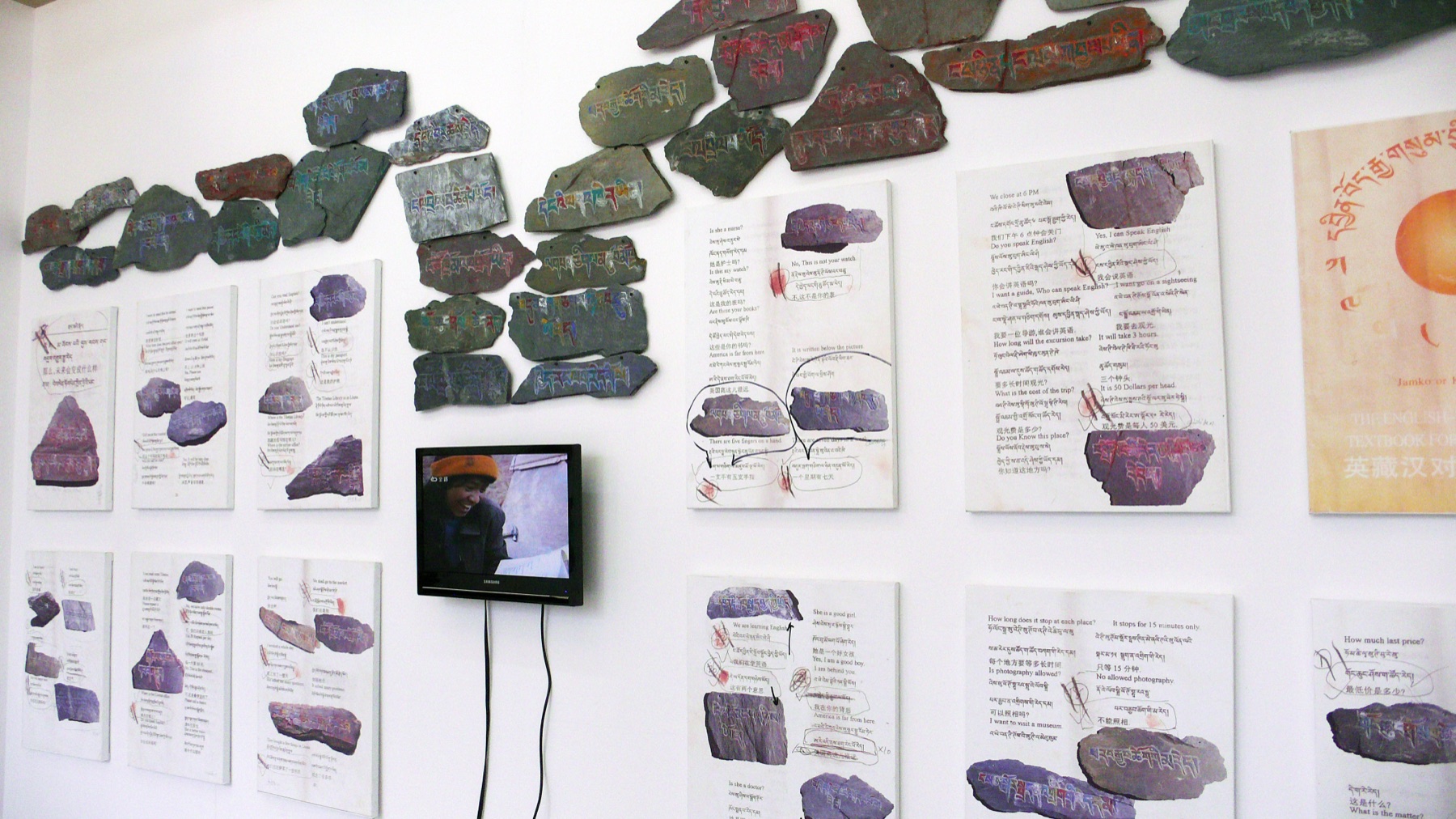
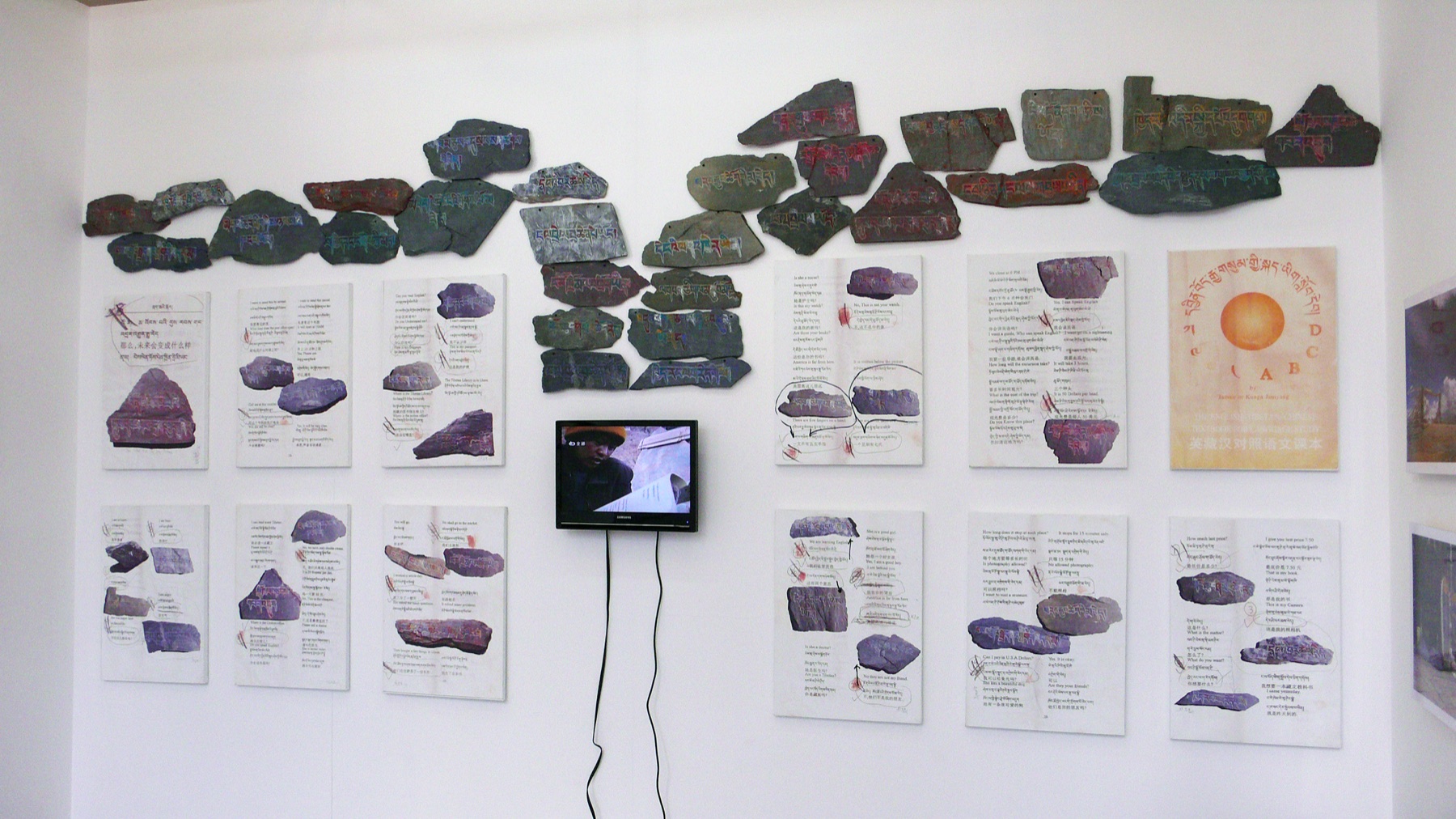
西藏的英语课本的内容和中国内地的英语课本差异十分明显,其中的例句多是“你们旅馆中有没有热水?”,“这里能不能换外币?”之类。世界对西藏的香格里拉想象早就成为一种国际政治的干预力量。人们一方面幻想西藏的荒野与阳光保存在永恒的原始状态,一方面渴望一个有热水和互联网的国际化的宾馆标准间。这些用中文、藏文注音的英语课本中透露了这样一种真相。除了殖民史中的早期接触者,现代西藏最早也最熟练的英语使用者是八角街上的商贩。在这里的录像中,拉萨药王山下的玛尼石雕刻工匠,依赖藏语注音艰难地说出发音并不准确的英语。并且把这些全球化的词语雕刻成玛尼石。艺术家把这些实际上写着现代语句的石块抛洒在西藏的各种旅游景点,提供给寻访香格里拉的各国旅游者误读。展示在这里的只是其中的一部分。
Tibetan English Textbook
Video and installation, 2007
The difference between the content of English textbooks of Tibet and mainland China is very apparent. In the Tibetan version, the example sentences are sentences such as ”Is there hot water in your hotel?” and “Can I exchange my foreign currency here?” etc. People imagination of Tibet as a Shangri-La has become an international political interfering force. While on the one hand fantasizing Tibet’s wilderness and sunshine being preserved in the eternal primitive state, people on the other hand are in desire of a standard hotel room with hot water and internet. A certain truth is revealed in the English textbooks with Chinese and Tibetan phonetic notation. Apart from the early early colonial encounters, the earliest and most proficient English users in modern Tibet are the venders on Barkhor street. In the videos works, the Mani stone carvers under Chakpori in Lhasa speak non-standard English with great difficulty with the help of Tibetan phonetic notation, and carved those global words and sentences into Mani stones. The artist scattered the stones with modern words at various tourist attractions for tourists to misread while looking for Shangri-La. What shown here are only part of the collections.