身体文明与本能文字鸿爪雪泥后感性
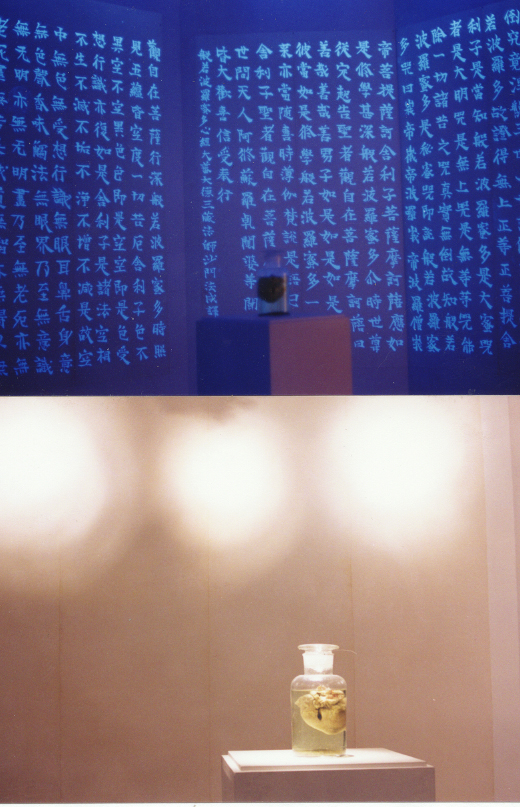
这个作品提供了对于“心”的两种观点,并使他们之间的转换与共存组织成一种戏剧性的身体经验。
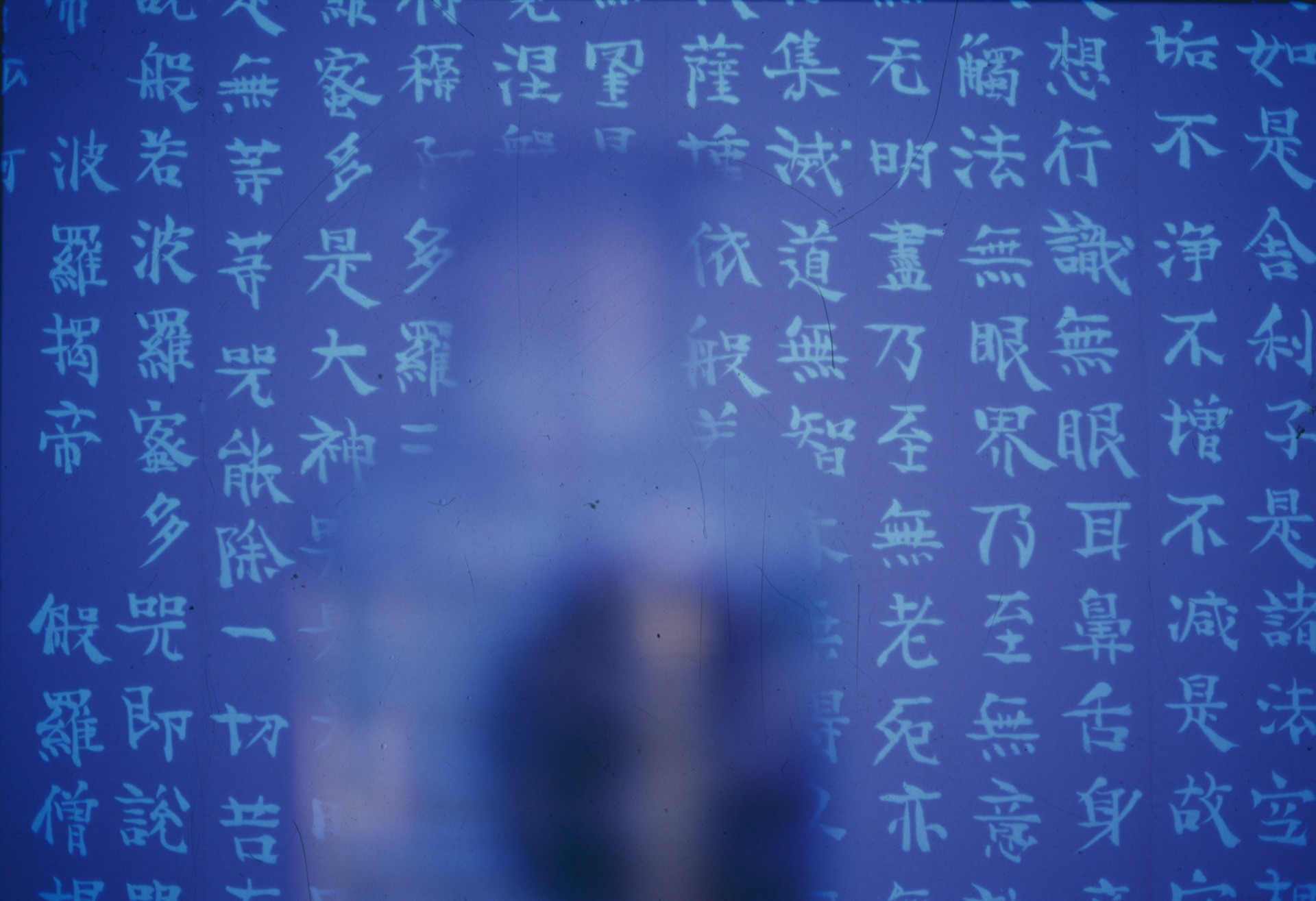
《般若波罗密多心经》是大乘佛教的重要经典,在中国禅宗典籍中具有特殊的地位。历代的译本达二十几种之多,古代书法家也反复书写这篇只有两百多字,却深刻讨论了心灵的宁静与超脱的文本。
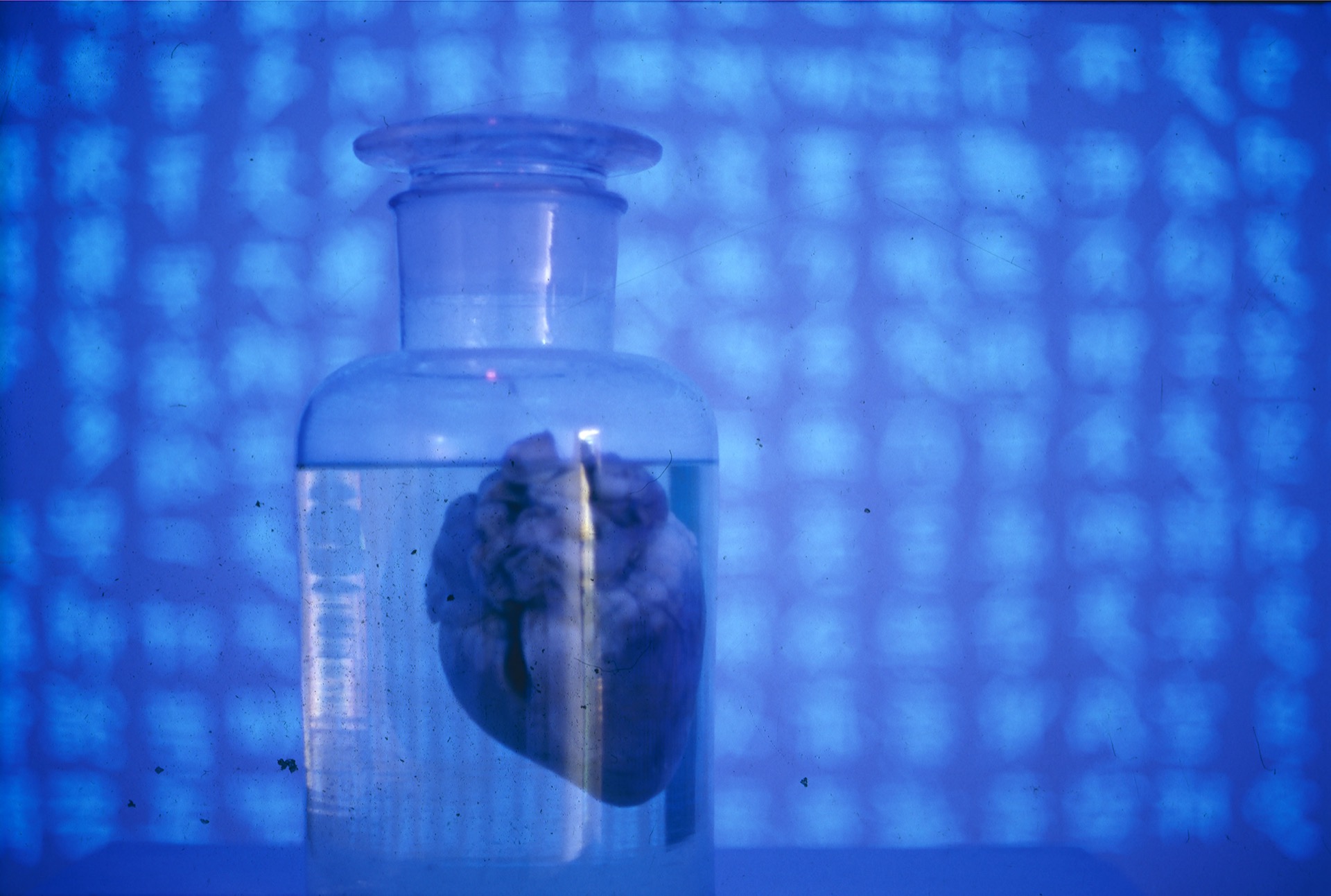
《心经》的文字用隐形幻彩颜料书写在墙上,在紫光灯的环境下,经文的字迹发出的荧光,飘浮在黑色背景之上。突然,强烈的白炽灯光亮起,紫光灯熄灭,字迹消失,观者看到的是空旷的白墙,并注意到空间正中的真人心脏标本。五秒钟后,灯光骤熄,紫光灯重新接通,观者的瞳孔经过一段时间适应黑暗之后,荧光色的经文渐渐从空中重新显现。重复以上过程。
中国传统思想中身体作为无足轻重的“臭皮囊”的观念与身体存在的不可抹杀的物质性,二者的冲突构成了这件作品的张力。
Heart·Sutra 1999
This works provides two different perspectives on heart and turns their transfer and coexistence into one kind of dramatic physical experience.
Sutra of the Heart of Prajnaparaita is one of the important sutra of Mahayana and also holds a very significant position in the sutra of Chinese Zen. There were over 20 different translations of the sutra in China's ancient dynasties and ancient calligraphers repeated writing this sutra of only about 200 words, which includes thorough discussions of the serenity and nirvana of heart.
The scripts of Heart·Sutra are written on the wall with invisible fluorescent paints. Under the purple lights, the scripts, which float in the dark background, give out fluorescence. In a sudden, the strong incandescent lights are turned on with the purple lights off and the scripts disappear., leaving the audiences nothing but the white empty wall and a real human heart specimen in the middle of the space. In five minutes, the incandescent lights are gone with the purple lights on gradually. The audiences pupils get used to the darkness for a while and the fluorescent scripts become visible in the air gradually. Such process will be constantly repeated.
The conflict of the idea of useless body in Chinese tradition and the indelible materialization of the physical existence composes the strain of this works.